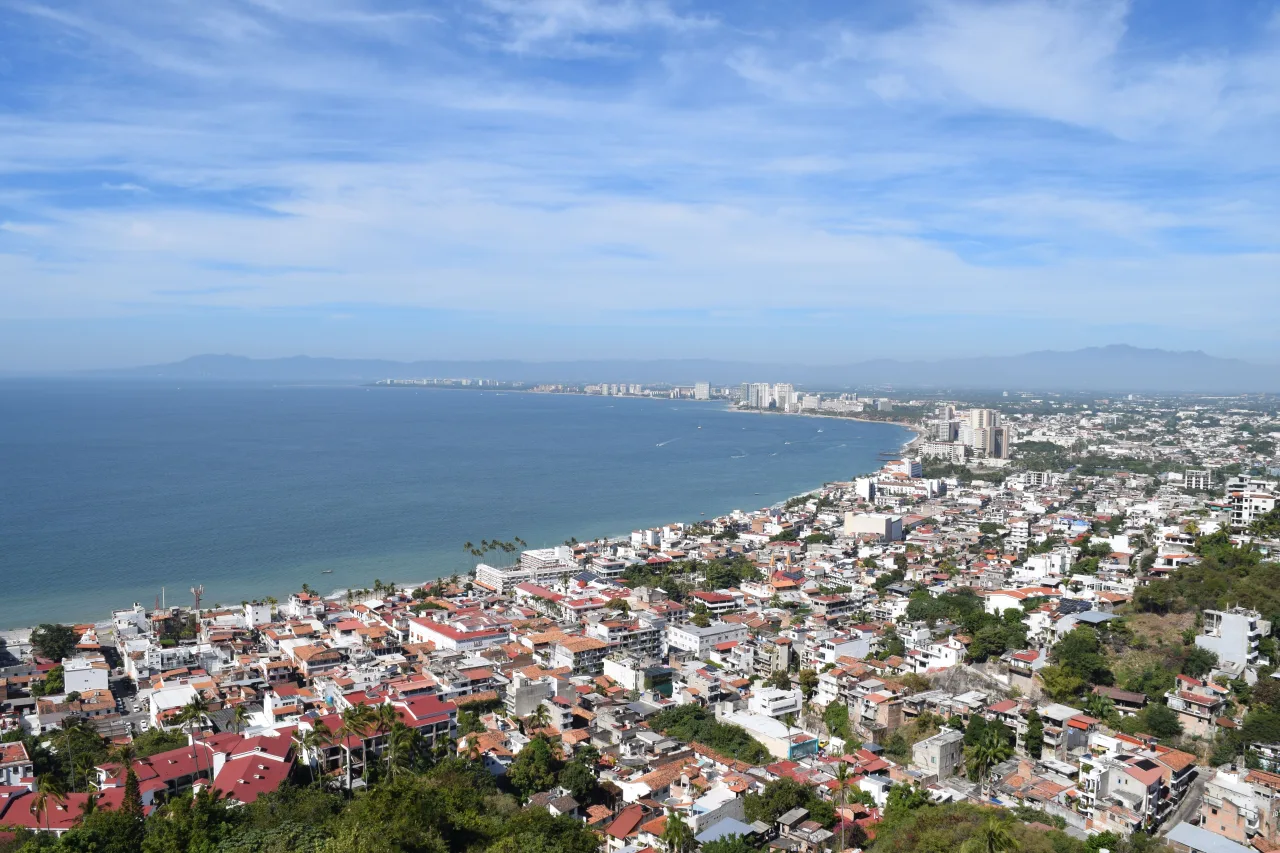
Vallarta’s red rooftops and blue bay, photographed in 2020. Photo by Zucker Pop · Pexels License.
Puerto Vallarta's past reaches beyond its beaches and famous film connections. Indigenous communities, a working coastal settlement and the growth of international tourism all belong in the story. The city's official founding anniversary marks one chapter, rather than the beginning of human life in the region.
People lived in the area long before the nineteenth-century town took shape. Archaeological investigations documented by the Universidad de Guadalajara describe a substantial pre-Hispanic settlement at Ixtapa, within today's municipality. Recorded remains include earthen structures, pottery and obsidian artifacts. This evidence is an important reminder that the region's Indigenous history cannot be reduced to the later arrival of settlers at the mouth of the Cuale River. [1]
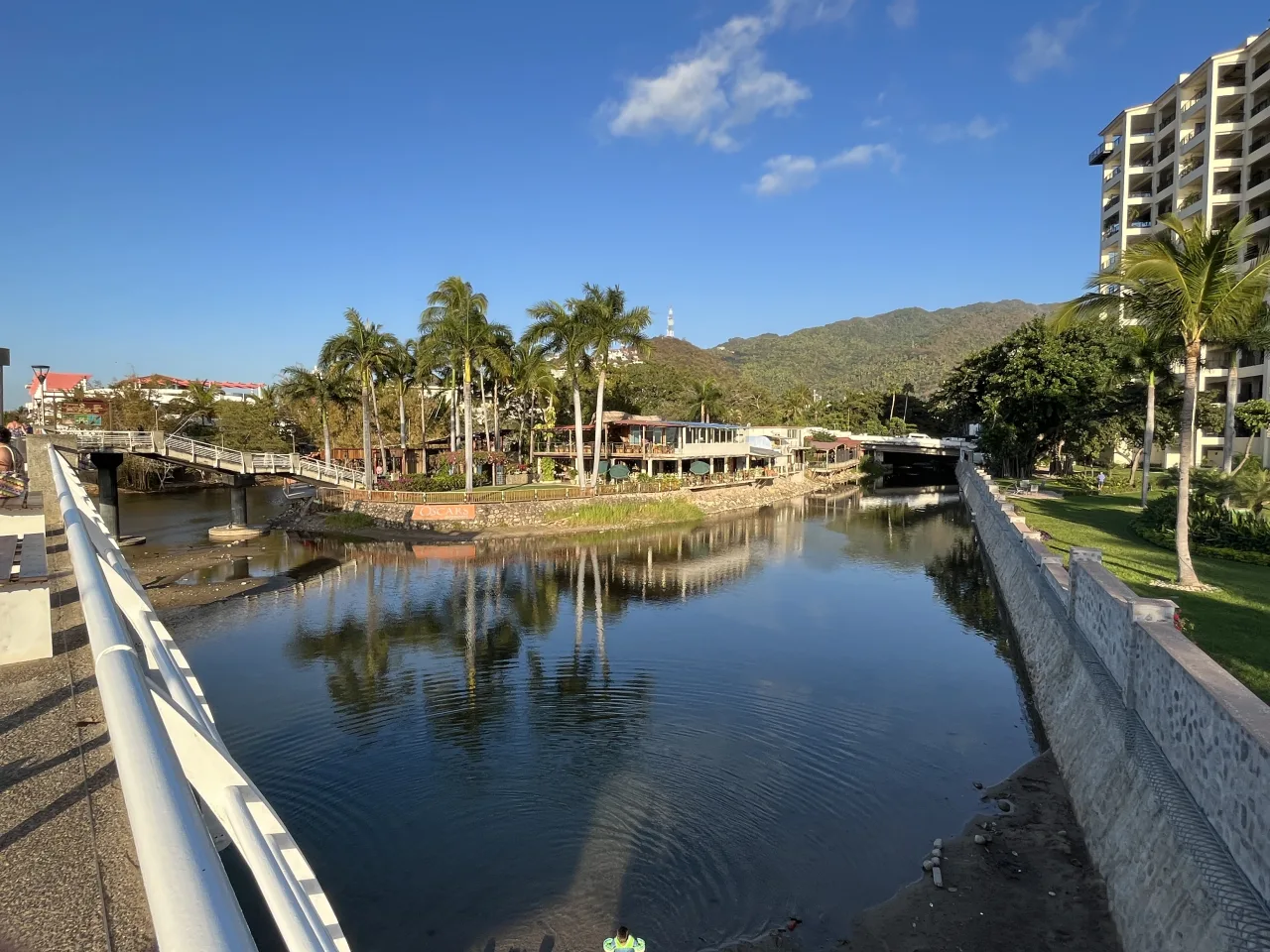
The Cuale River and island, photographed February 21,2023. This contemporary view illustrates the setting of the early coastal settlement; it does not show Las Peñas in 1851. Photo: Another Believer · CC BY-SA 4.0. Full frame; resized and compressed for display.
Municipal history recognizes December 12, 1851 as the official founding date of Las Peñas de Santa María de Guadalupe. The account names Guadalupe Sánchez Torres, his wife Ambrosia Carrillo and other families among the founders. [2]
The date should be understood as the town's official founding tradition, not proof that no one lived here earlier. The tourism board's historical account notes earlier coastal inhabitants and distinguishes the commemorative date from an 1859 property record. It also describes how the settlement developed through links with inland mining: shipping, fishing and agriculture supported activity in the Sierra. Las Peñas grew as a place connected to both the sea and the surrounding countryside. [3]
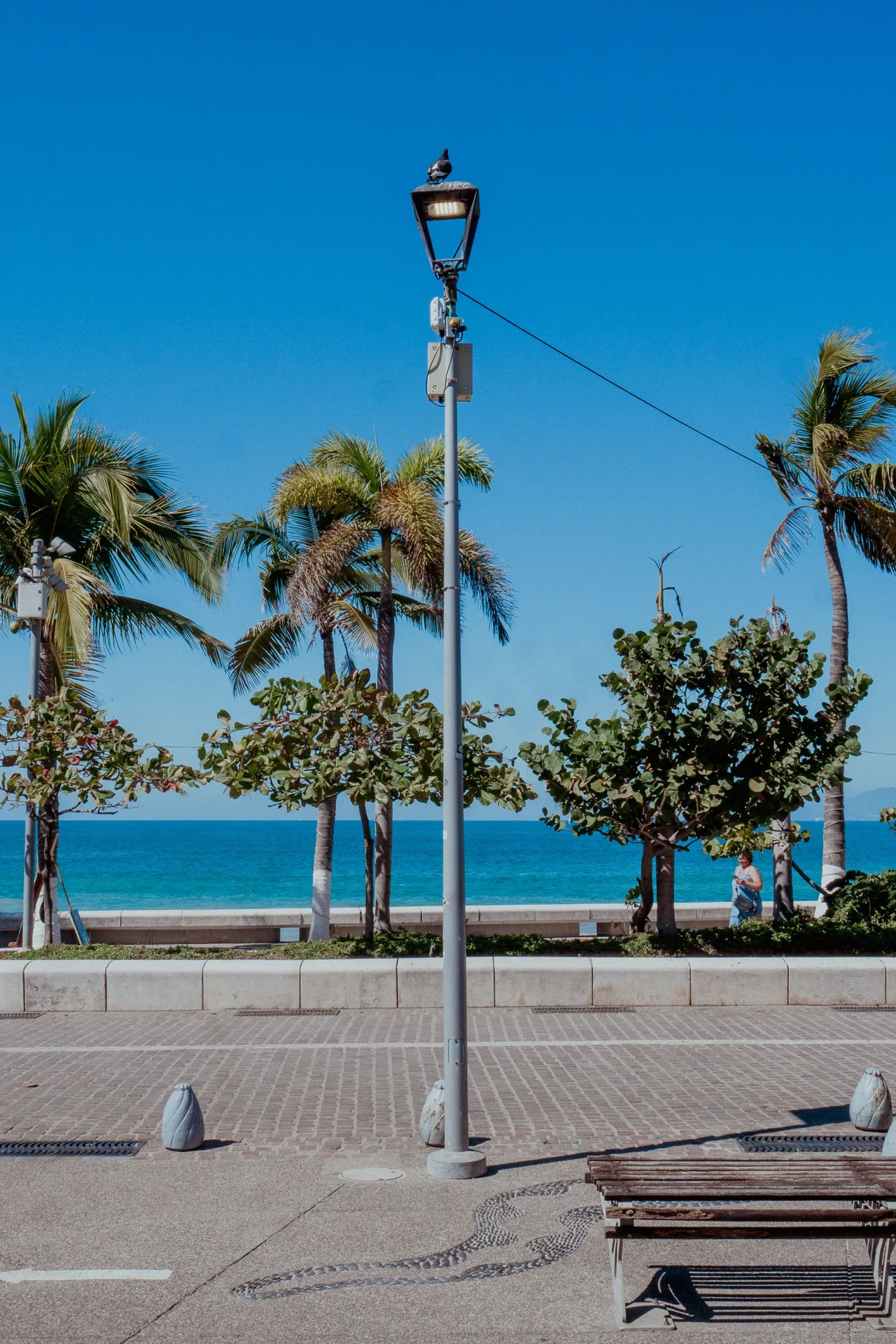
The Malecón beside Banderas Bay, photographed January 27, 2024. A present-day view of the waterfront discussed in these stories. Photo: Daniel Arenas / Pexels · Pexels License.
On May 31, 1918, the Jalisco legislature elevated Las Peñas to municipal status. The decree, published on June 5, gave the municipality the name Puerto Vallarta in honor of Ignacio L. Vallarta, the Jalisco jurist and former state governor. [2]
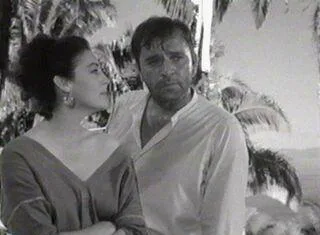
Ava Gardner and Richard Burton in the 1964 theatrical trailer for The Night of the Iguana. MGM trailer / Wikimedia Commons source and provenance. Original black-and-white image; not AI-generated.
The filming of The Night of the Iguana at Mismaloya in 1963 brought a new level of international attention. Director John Huston and a cast including Richard Burton, Ava Gardner and Deborah Kerr worked on the production. Elizabeth Taylor accompanied Burton during the production. Press interest in the stars helped draw attention to the wider destination. [4]
The Universidad de Guadalajara describes the production as a catalyst for tourism. That is a more accurate way to tell the story than saying Hollywood created the town: communities and livelihoods had existed here long before the cameras arrived. [4]
Long before the film made the name famous, iguanas were part of this tropical landscape. Look along riverbanks and up into sunlit branches: green iguanas bask to regulate their body temperature and feed mainly on leaves, flowers and fruit. The Río Cuale area offers an urban setting where visitors can watch quietly from paths; wildlife sightings are never guaranteed.
These three photographs show different iguanas in Puerto Vallarta, rather than animals presented as a film scene. Their colours can vary considerably. Give them space, keep dogs away, and do not handle, chase or feed them. Enjoy the view with a zoom lens instead of approaching closely.
Read more: Puerto Vallarta tourism board — Green Iguanas · 2016 study of green-iguana behaviour at Cipactli, Puerto Vallarta. Sources checked November18,2026.
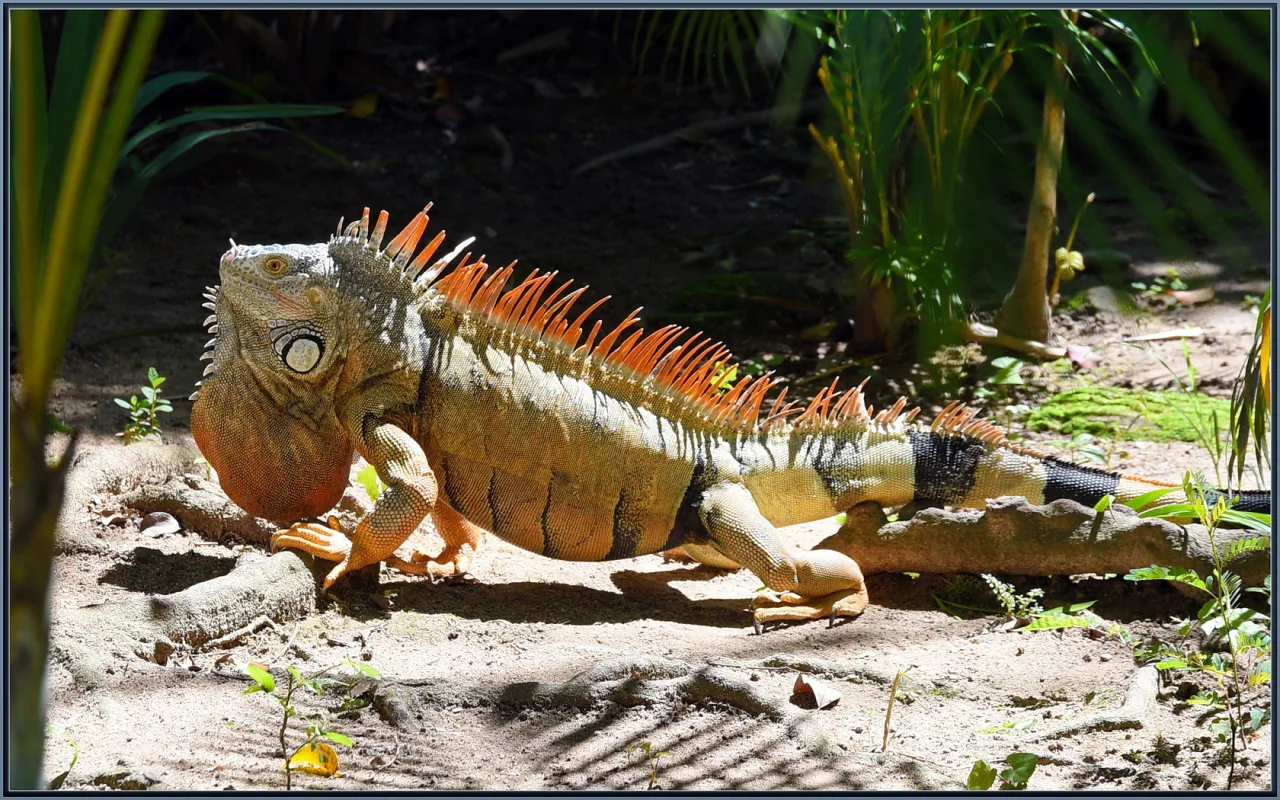
Iguana photographed in Puerto Vallarta. 8 September 2017, 10:14:31 (UTC). Original colour photograph. Photo: Terry Lucas / Wikimedia Commons · CC BY 3.0. Full frame; native display copies resized.
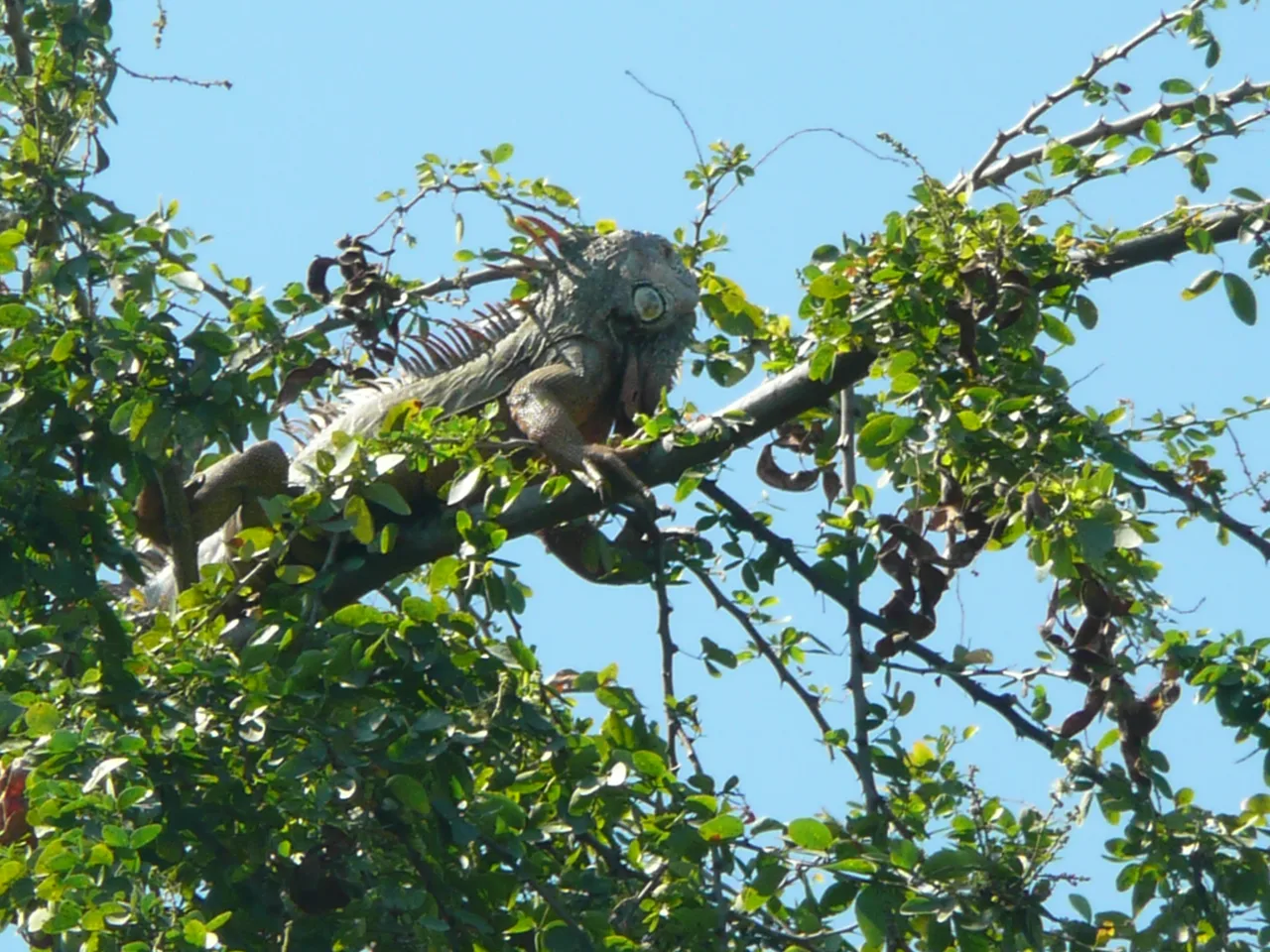
Iguana photographed in Puerto Vallarta. 2008-01-28. Original colour photograph. Photo: Oescalona / Wikimedia Commons · CC BY-SA 3.0. Full frame; native display copies resized.
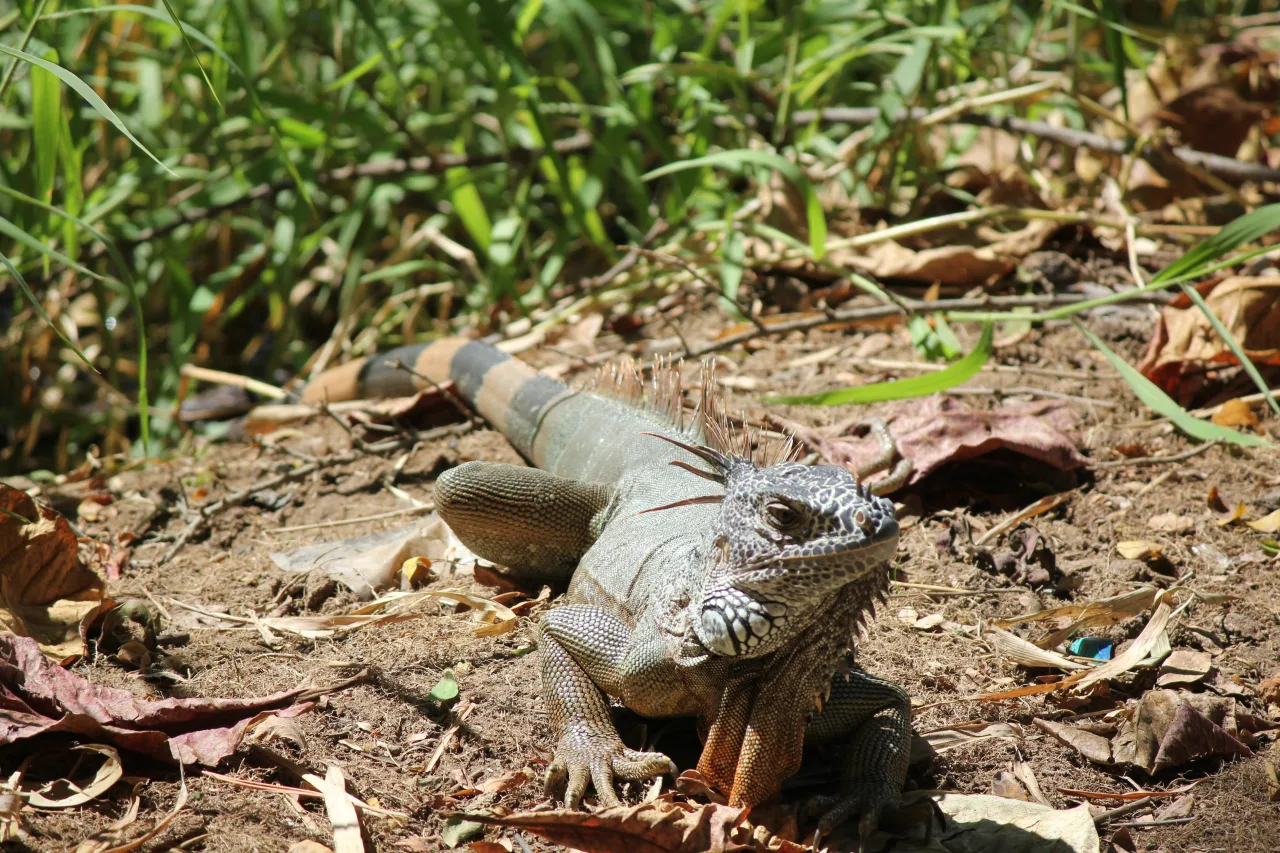
Iguana photographed in Puerto Vallarta. 2014-01-27 11:14:08. Original colour photograph. Photo: terri_bateman / Wikimedia Commons · CC BY 2.0. Full frame; native display copies resized.
On May 31, 1968, Puerto Vallarta received city status under Jalisco decree 8366, fifty years after becoming a municipality. [2]

Los Muertos Pier illuminated at dusk — a modern view of the waterfront. Photo by stephan de MARANTHI · Unsplash License.
Local heritage is also visible beyond the timeline. The Church of Our Lady of Guadalupe, with its distinctive crown, remains a symbol of the city and its devotional traditions. The Malecón brings public sculpture and cultural life to the waterfront. Farther south in the Zona Romántica, Los Muertos Pier connects the beach community with water taxis serving the southern coast. Together, these places offer different ways to encounter Vallarta's religious, artistic and maritime identity. [5] [6] [7]
- Before the modern town: Indigenous settlement documented at Ixtapa. [1]
- December 12, 1851: Official founding date of Las Peñas. [2]
- May 31, 1918: Municipal status and the name Puerto Vallarta. [2]
- 1963: The Night of the Iguana filmed at Mismaloya. [4]
- May 31, 1968: Puerto Vallarta receives city status. [2]
On August 20, 1970, photographers from the White House Photo Office recorded the visit of U.S. President Richard Nixon and Mexican President Gustavo Díaz Ordaz to Puerto Vallarta. These two details from Robert L. Knudsen’s contact sheet show the motorcade and the people who lined its route. Nixon Presidential Library archive record. View the full 1970 contact sheet.
The photographs open as generated monochrome display copies derived from the original color archive scans. Select the color wheel for a separately processed, AI-restored color interpretation with improved color balance, contrast and clarity. AI may reconstruct fine details; these enhanced views are not untouched archival evidence. The unprocessed archive scans remain available below.
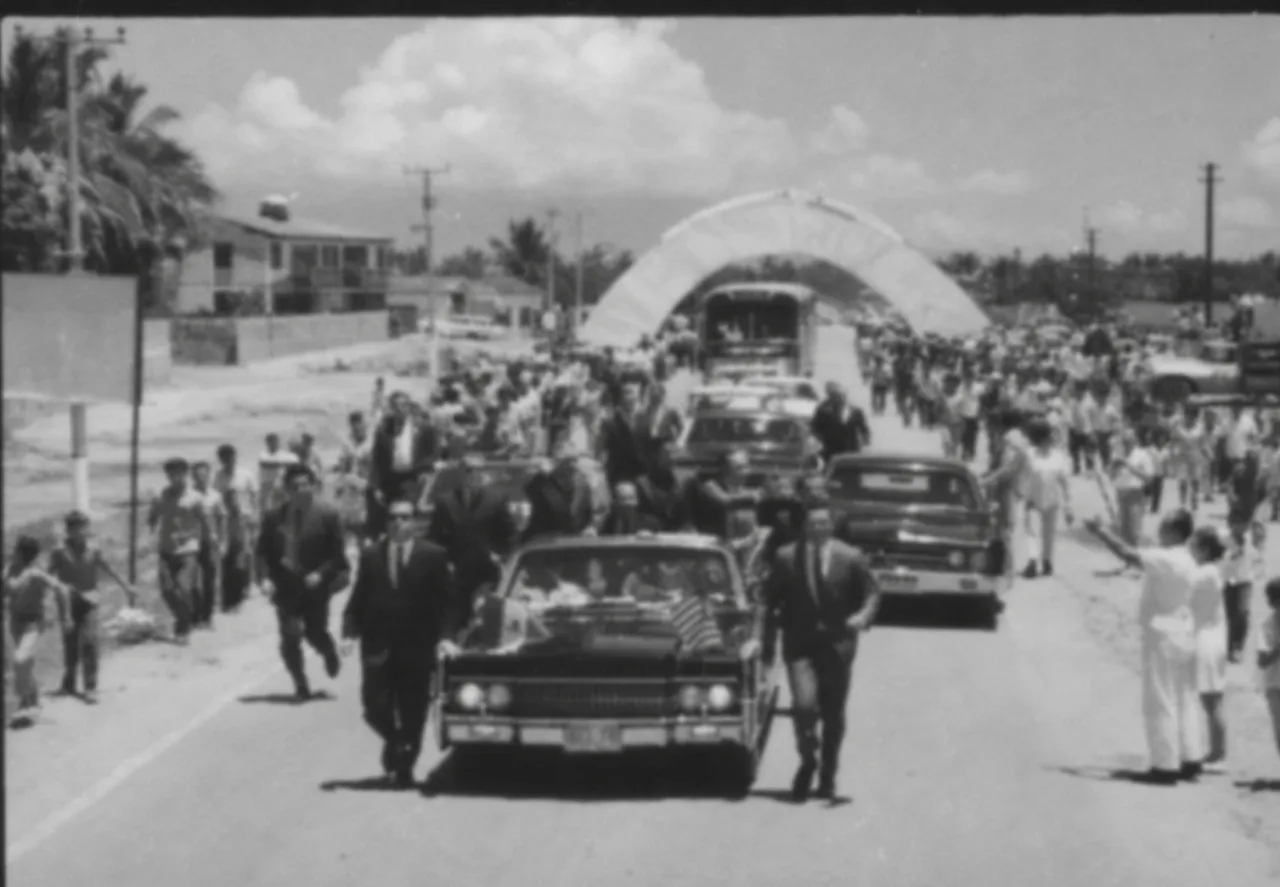
Presidential motorcade entering Puerto Vallarta in 1970. Source scene: August 20, 1970; WHPO-4197, frame 4A. Generated monochrome display copy derived from the original COLOR archive scan. The color wheel opens a separately processed AI-restored color interpretation; colors and details may differ from the source.
Robert L. Knudsen / White House Photo Office / Richard Nixon Presidential Library and Museum, NARA; display processing for PVPlaces · Underlying image: U.S. government work / NARA. Generated monochrome display derivative. · Archive record ↗
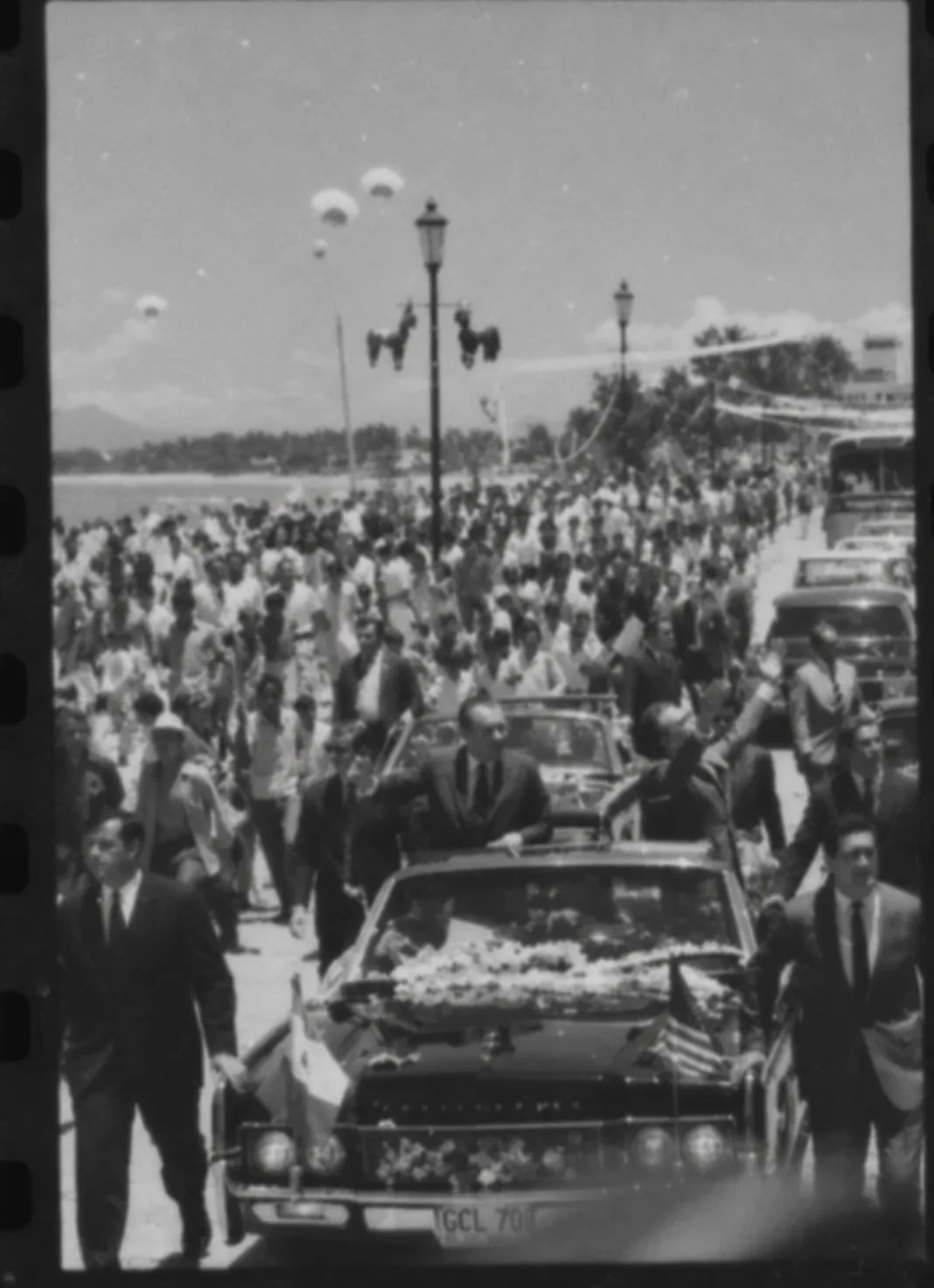
Motorcade and waterfront crowds in Puerto Vallarta in 1970. Source scene: August 20, 1970; WHPO-4197, frame 12A. Generated monochrome display copy derived from the original COLOR archive scan. The color wheel opens a separately processed AI-restored color interpretation; colors and details may differ from the source.
Robert L. Knudsen / White House Photo Office / Richard Nixon Presidential Library and Museum, NARA; display processing for PVPlaces · Underlying image: U.S. government work / NARA. Generated monochrome display derivative. · Archive record ↗
Unprocessed archive views: Welcome arch — original color scan · Waterfront — original color scan
Go beyond the overview with fifteen stories about work, art, public space, development and recovery. These additions and their photo sources were checked November 16, 2026. Modern photographs are identified separately from archive views.
The university’s archaeological field report dates the first research season at Ixtapa to July 5, 1987, following a warning about damage to the site. Surface investigations outlined a settlement of roughly 60 hectares and recorded 29 structures, largely mounds built with earth and river cobbles. These were traces of a substantial community, rather than a single isolated building.
The report also documents destruction by machinery, looting and reuse of mound material for construction. Housing and infrastructure can erase evidence before it is understood. Ixtapa’s importance therefore extends beyond an early date on a timeline: it raises a continuing question about how Vallarta preserves its past.
Source: Universidad de Guadalajara — Ixtapa field report.
Vallarta’s earlier economy depended on movement between the coast and the interior. A university history describes goods, tools and passengers arriving by sea, with longshore work providing employment for local people. Overland travel was slow and especially difficult during the rains. The bay was a practical transport connection long before it became the setting for a holiday.
That perspective puts ordinary workers back into the story. A coastal settlement needed people to handle cargo as well as fish, cultivate fields and trade. The same study identifies later agricultural phases, including tobacco between 1939 and 1955. Tourism changed the balance of employment in a place that already had working relationships with its surrounding countryside.
Source: Universidad de Guadalajara — Puerto Vallarta: 2,600 años de historia y evolución cultural.
In the 1920s, the Montgomery Fruit Company’s banana plantations at Ixtapa brought an export economy into the valley. Fruit intended for the United States was shipped before ripening. The tourism board remembers the period as a green-gold boom. Accounts differ on some establishment and closing dates, but agree on the significance of plantations and exports in the decades before mass tourism.
Agrarian reform in the 1930s changed landholding and helped bring the plantation-company era to a close. Agricultural labor, export demand and land policy had already transformed livelihoods before the movie-star era. Looking inland toward Ixtapa reveals an economic landscape quite different from the beachfront hotels, and one that belongs just as firmly in the city’s history.
Source: Puerto Vallarta tourism board — Historia de Puerto Vallarta.
The municipal heritage inventory dates Teatro Saucedo to 1922 and associates its construction with Juan Saucedo and engineer Ángel Corsi. At Juárez and Iturbide, the building combined entertainment spaces. The lower floor accommodated theatre, cinema and boxing, while the upper level was used for casino activities, dances and receptions.
Its uses also reflected national conflict. The municipal account records a period as barracks and stables during the Cristero struggle. A building remembered for evenings out became part of a very different daily reality. That succession of uses reveals traces of leisure, war and adaptation in the same structure. The inventory is a historical source, not a statement about which business occupies the premises today.
Source: Municipal government — Plan Municipal de Desarrollo 2010–2012, heritage inventory.
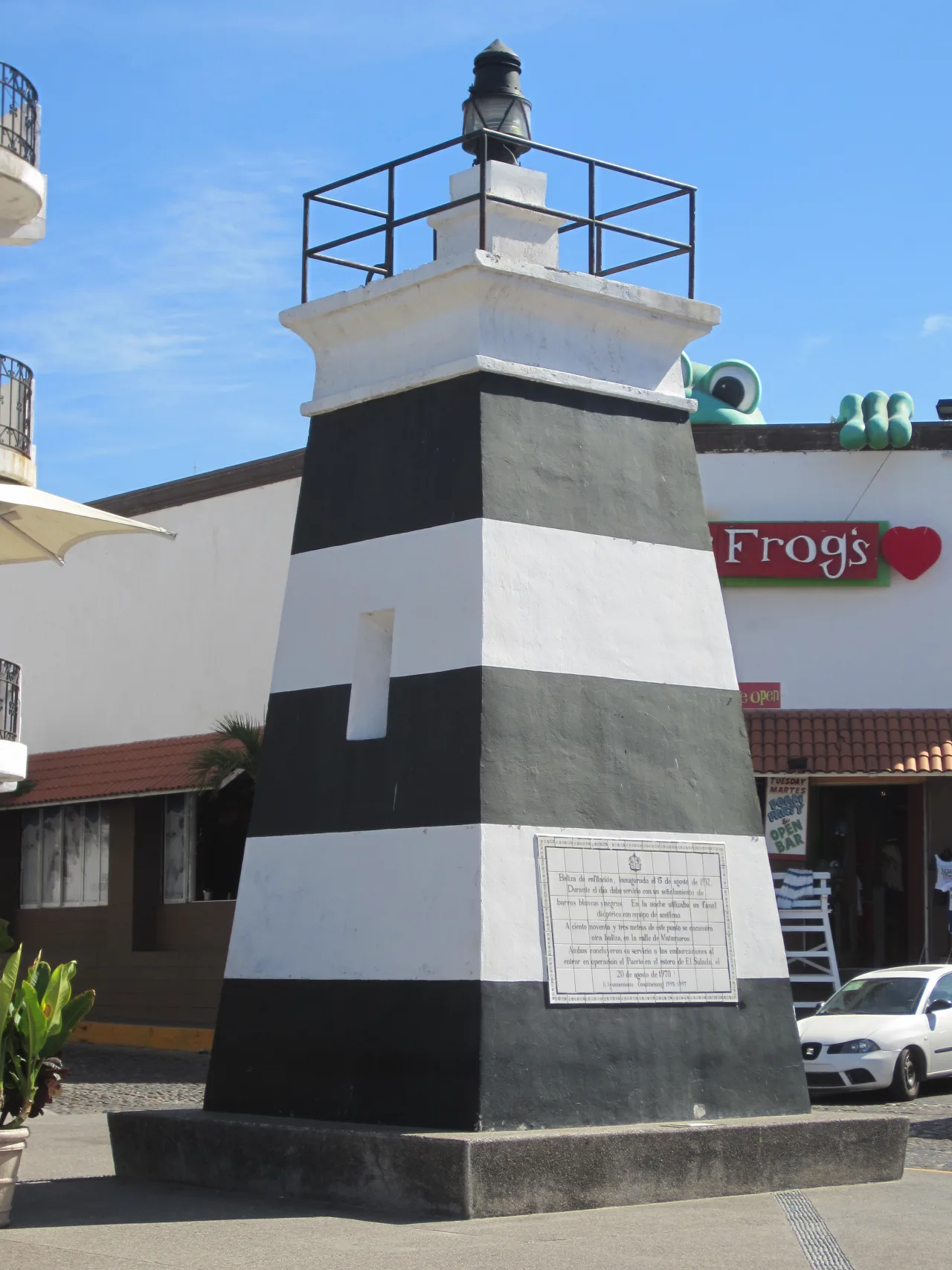
The old black-and-white navigation light on the Malecón, photographed February 13,2014. A modern photograph of the historic structure. Photo: Another Believer · CC BY-SA 3.0. Full frame; resized and compressed for display.
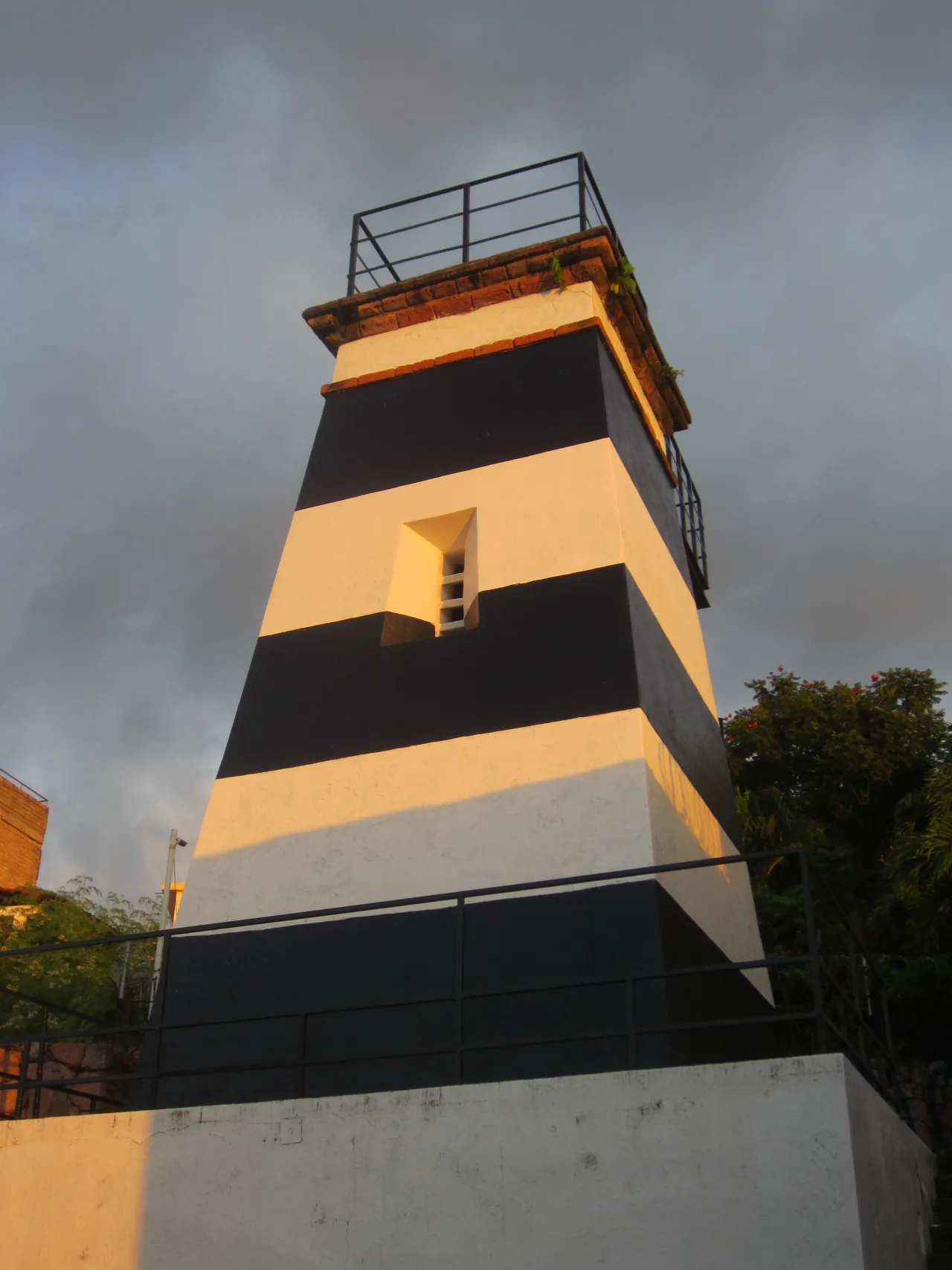
The old navigation light on Matamoros Street, photographed October 27,2021. A modern photograph of the historic structure. Photo: Another Believer · CC BY-SA 4.0. Full frame; resized and compressed for display.
Vallarta’s historic navigation lights worked as a pair. The Lighthouse Directory records a 1932 front light on the Malecón and a rear light higher up on Matamoros. Viewed from the water, aligned lights provided a bearing toward the port. Their different elevations were part of the system, rather than an accidental placement of two scenic towers.
The structures have outlasted their navigation role and help explain the working-waterfront landscape behind the resort image. They should be distinguished from the prominent tower at Marina Vallarta: the directory identifies that modern landmark separately and does not classify it as an official navigation aid. Similar-looking landmarks can tell very different stories.
Source: The Lighthouse Directory, University of North Carolina — Mexico’s west coast.
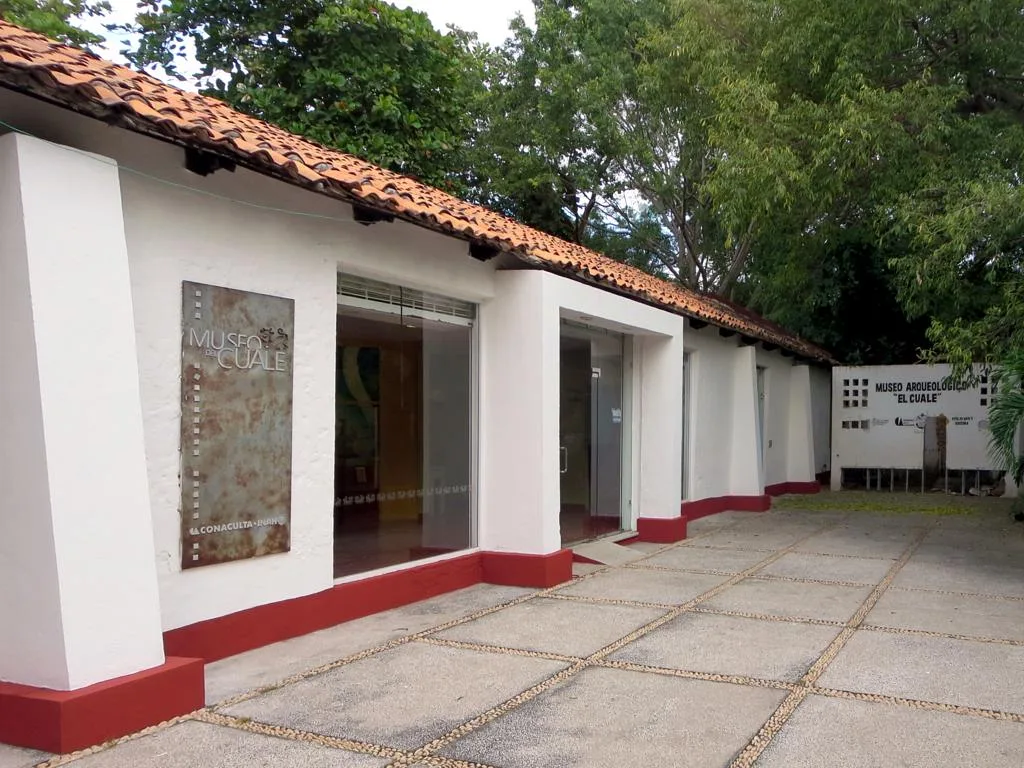
The Museo del Cuale building on Isla Cuale, photographed December 13,2014. This is a dated view of the museum, not confirmation that it is currently open. Photo: David Stanley from Nanaimo, Canada · CC BY 2.0. Full frame; resized and compressed for display.
The federal cultural information system records the founding of the Museo del Cuale on December 1, 1973. Its opening exhibition explored the Manila Galleon and exchanges linking Mexico, the Philippines and Spain. That choice connected the local waterfront with a wider Pacific history of food, goods and cultural contact.
The same record describes archaeological material recovered in the region, particularly around Ixtapa and Valle de Banderas. On an island better known to many visitors for markets and pedestrian crossings, those objects point back to lives that preceded the modern city. The museum joins regional history with ocean-spanning exchange. Check the institution directly for current access; this historical account does not establish its opening arrangements.

The crown of Our Lady of Guadalupe church, photographed in 2025. Photo by Ham Chitnupong · Pexels License.
The crown above Our Lady of Guadalupe is easy to mistake for something that has stood unchanged for centuries. The tourism board describes a more recent sequence of making, damage and replacement. José Esteban Ramírez Guareño’s concrete crown was installed in 1965 and damaged in the 1995 earthquake. The present crown was created in 2009 by Jalisco artist Carlos Terrés, following the earlier design.
The familiar silhouette represents craftsmanship and a community’s response to loss. Different accounts give different starting points for the church’s long construction process; the crown sequence is clearer. Looking up from the central streets, visitors see a twentieth-century devotional symbol carried forward through twenty-first-century work.
Source: Puerto Vallarta tourism board — Discovering El Centro.
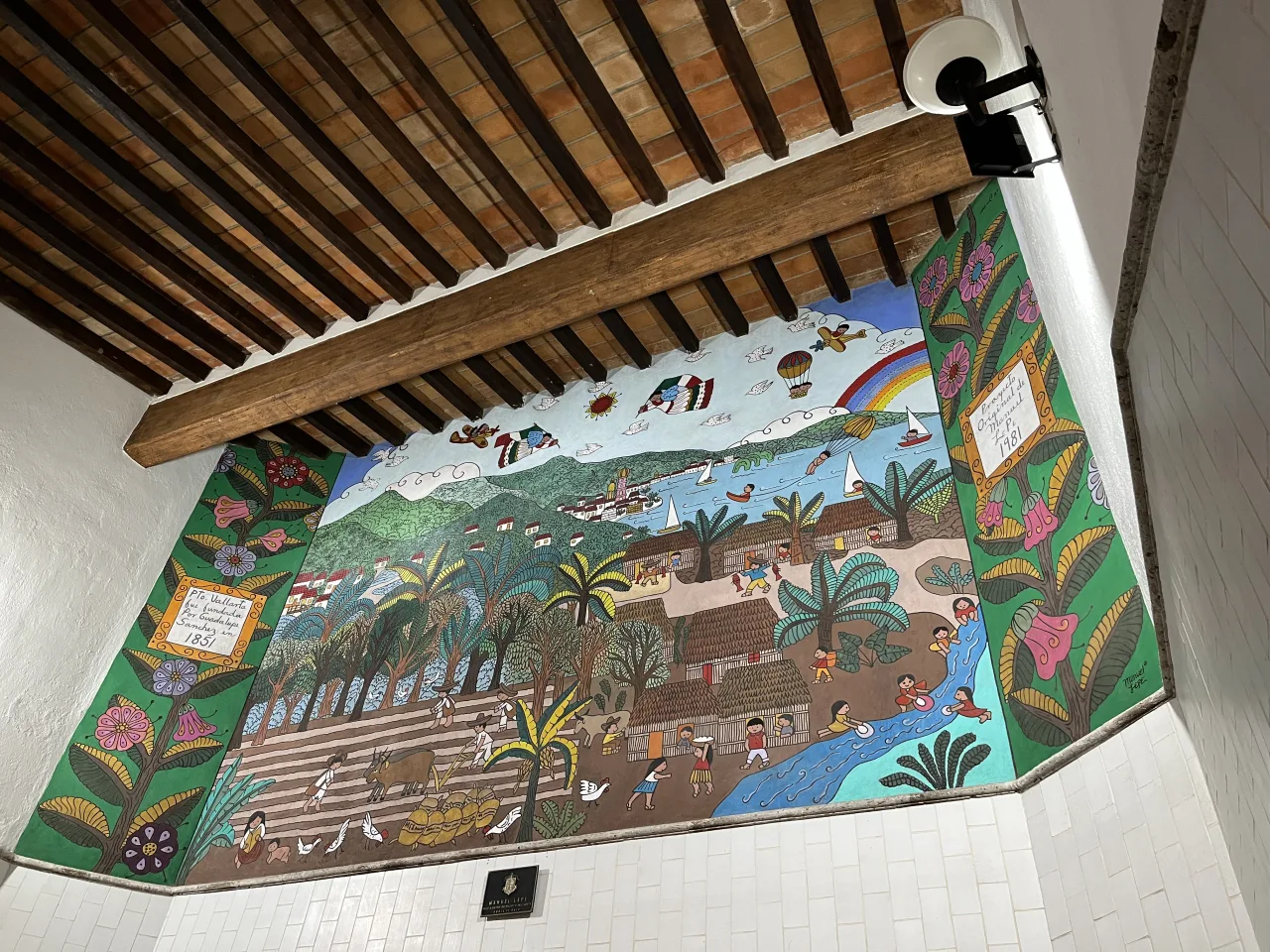
Manuel Lepe’s Puerto Vallarta mural inside City Hall, photographed February 15, 2024. The painted historical scene is an artwork, not a historical photograph. Photo: Another Believer · CC BY-SA 4.0. Full frame; resized and compressed for display.
Manuel Lepe’s imagery offers a Vallarta story told by a local artist. A university report on the restoration of his municipal mural explains that the large work titled Puerto Vallarta involved another painter, Abel Bustos. Lepe’s difficulty working at heights led him to seek help in 1982; the mural was not simply a large picture painted entirely by one person.
The report follows the imagery into another generation. In 2020, Marcela Lepe Quiroz and Luis Enrique Pérez Lepe reproduced motifs on Cuale bridge columns as part of a public-space programme. Pilgrimages, beachgoers and recognizable cherubs moved into an everyday urban setting. The story concerns both preservation and continuation: restoring an established work while bringing a family’s visual memory into the streets.
Source: Universidad de Guadalajara — Manuel Lepe mural restoration, January 19, 2021.
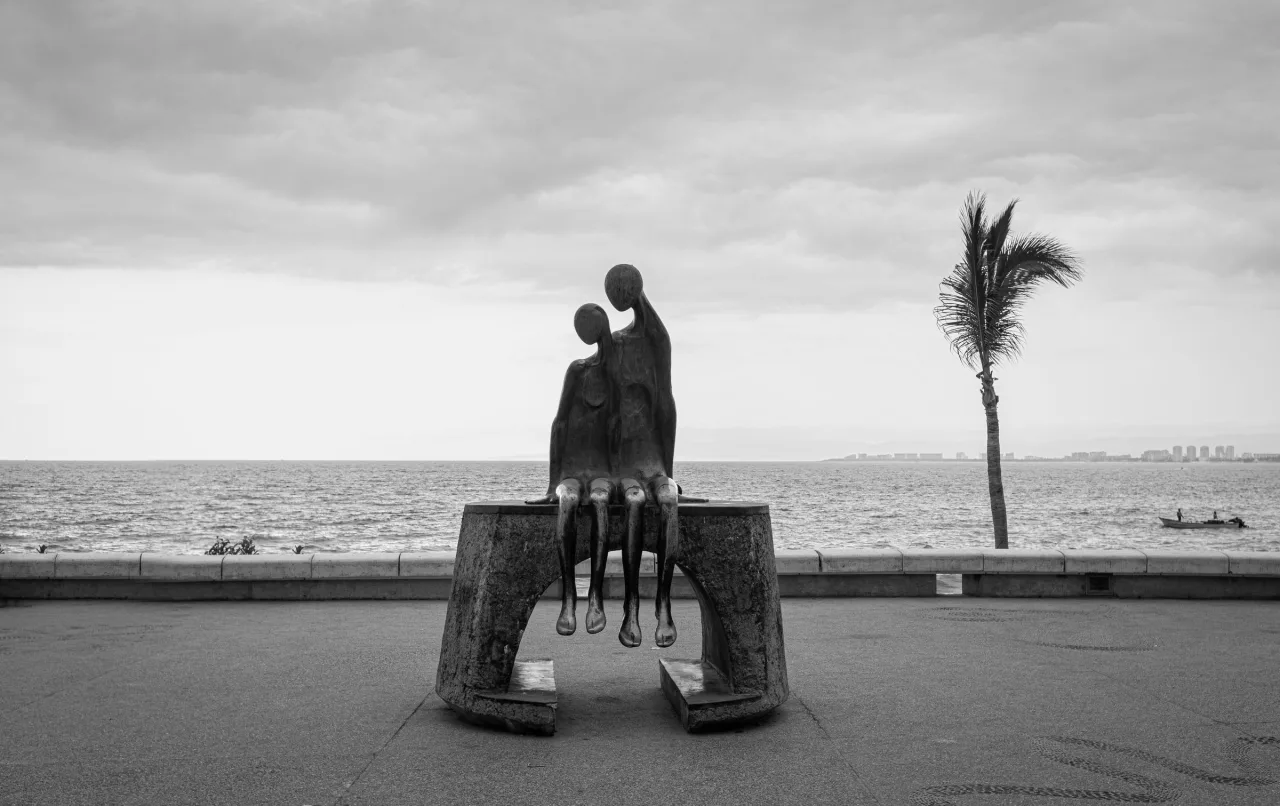
Nostalgia by Ramiz Barquet, photographed on the Malecón on June 13, 2024. This is a modern black-and-white photograph, not a vintage archive view. Use the color wheel for a separate AI color interpretation; the original remains available.
Fer Izaguirre / Pexels · Pexels License — free use and modification permitted; photographer credited. https://www.pexels.com/license/ · Archive record ↗
Nostalgia by Ramiz Barquet, photographed on the Malecón on June 13, 2024. This is a modern black-and-white photograph, not a vintage archive view. Use the color wheel for a separate AI color interpretation; the original remains available. Photo: Fer Izaguirre / Pexels · Pexels License.
The elongated bronze figures of Nostalgia are connected to sculptor Ramiz Barquet’s own life. In his account reproduced by Puerto Vallarta Net, he describes plans to marry Nelly that did not work out, separate lives and a reunion after 27 years. Time together in Vallarta, including sitting by the sea, became the sculpture’s emotional setting.
The municipal inventory dates the work to 1984. Its seated couple turns private memory into a public encounter beside the bay. The black-and-white photograph below was taken in 2024 and is identified as modern. Its color wheel opens a separate AI interpretation with restrained bronze, stone and sea colors. It illustrates an older artwork; it is not presented as a photograph from the year of installation.
Sources: Barquet’s account reproduced by Puerto Vallarta Net · Municipal sculpture inventory.
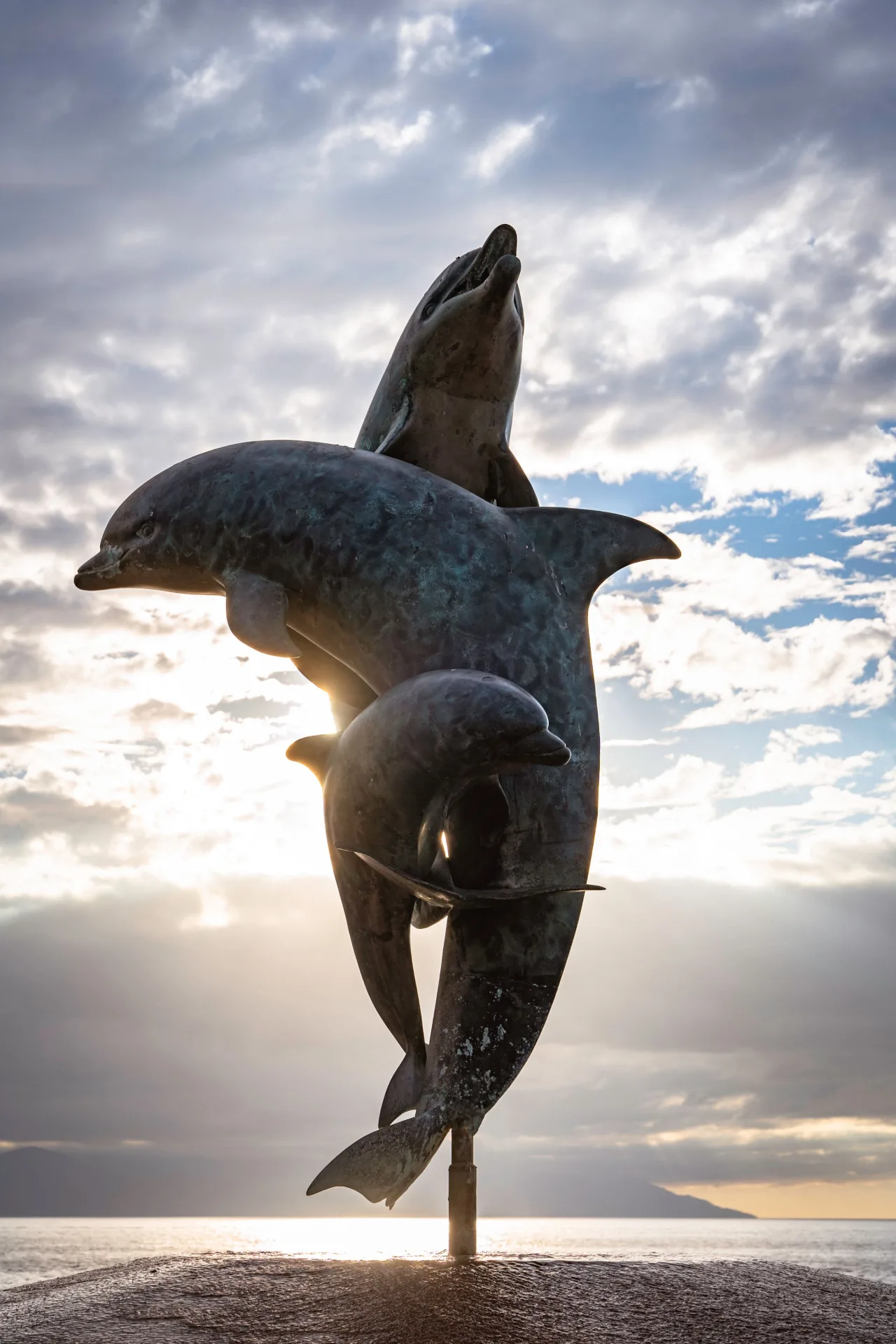
A contemporary close-up of the bronze dolphins of the Friendship Fountain against the bay. Photograph capture date was not supplied in the checked source record. Photo: Soly Moses / Pexels · Pexels License.
Santa Barbara’s city government dates its sister-city relationship with Puerto Vallarta to June 12, 1973. The sister-city committee’s archive records visits, cultural exchanges and practical assistance, including support for eye-surgery teams and an ambulance donation. These connections developed through repeated work between people in two coastal cities.
An item reproduced from May 1985 describes committee president Gil Garcia presenting a photograph and small model of Bud Bottoms’s dolphins to Vallarta’s mayor. The proposed fountain was intended as a visible symbol of friendship. The municipal inventory dates the resulting Friendship Fountain to 1987. Seen in that context, the dolphins represent much more than a pleasant subject for a waterfront photograph.
Sources: Sister Cities Committee — history and minutes · City of Santa Barbara · Municipal sculpture inventory.

A contemporary view of Carlos Espino’s Neptune and Nereid (1990), also called Triton and Siren, beside Banderas Bay. Photograph capture date was not supplied in the checked source record. Photo: Soly Moses / Pexels · Pexels License.
The Malecón’s public art accumulated over time, with artists contributing different visual languages. The municipal inventory records Carlos Espino’s Neptune and Nereid in 1990, alongside works by Barquet, Alejandro Colunga, Sergio Bustamante and others. The bronze sea figures pictured here are also commonly called Triton and Siren. They belong to a developing outdoor collection, rather than a single coordinated commission.
The tourism board describes a promenade where sculpture meets music, theatre, dance, galleries and food. A walk beside the bay is also a walk through changing choices about public space. The sculptures do not all commemorate the same event; together they show several decades of cultural activity in an evolving city.
Sources: Municipal sculpture inventory · Puerto Vallarta tourism board — El Malecón.
The archive photographs above show streets and spectators during the August 1970 presidential visit. The next day’s White House Photo Office catalogue adds another layer. August 21 entries place Richard Nixon, Pat Nixon and Mexican President Gustavo Díaz Ordaz at the Camino Real Hotel; others identify lunch there and the departure from Puerto Vallarta’s airport.
The catalogue distinguishes photographers, rolls and frames. Oliver Atkins’s black-and-white rolls include Vallarta scenes, but some frames in the same day’s record were made after the party reached California. A photograph therefore needs its own location evidence, not just a date or famous face. These records document a moment when hotels, the airport and town streets formed the setting for an international visit. Unverified scans are not substituted for local photographs.
Source: Nixon Presidential Library — August 21, 1970 catalogue.
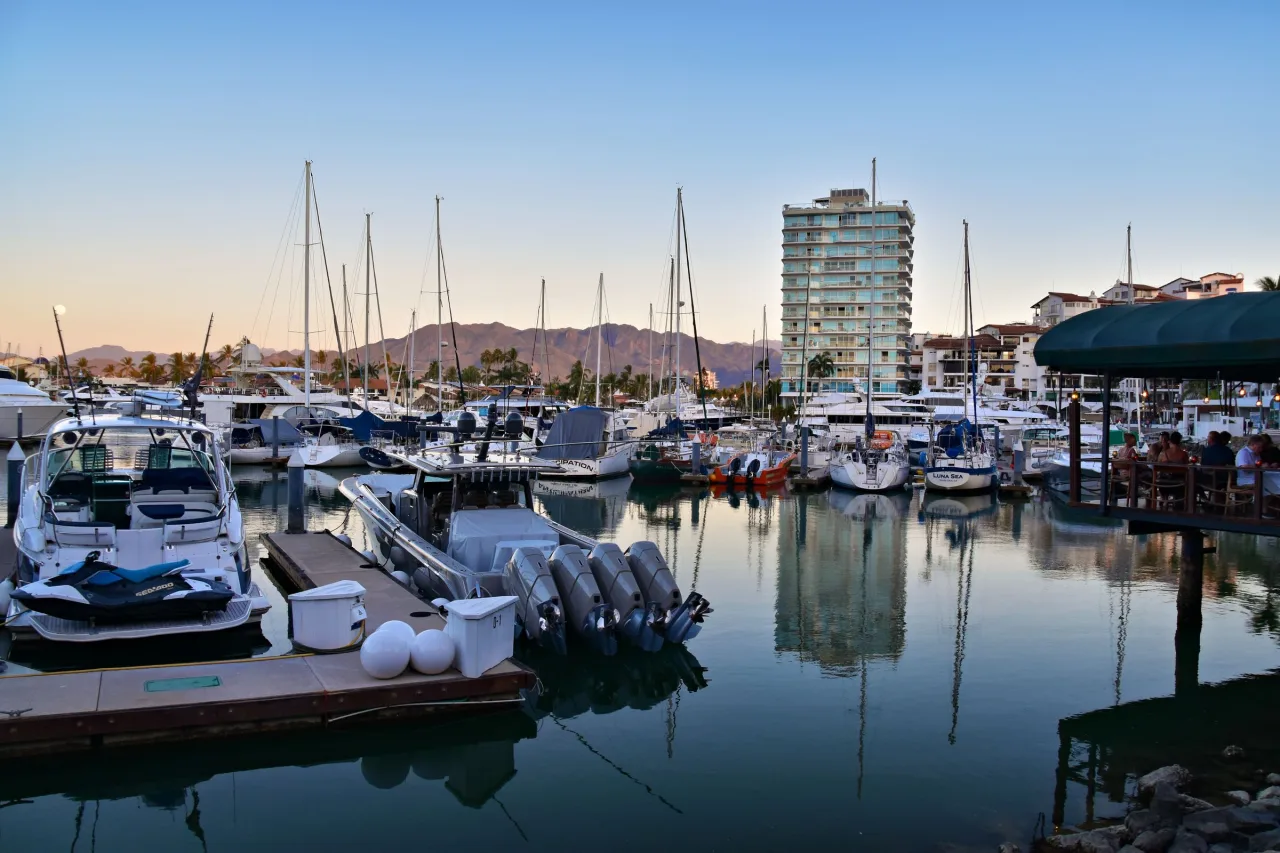
A contemporary view of boats, waterfront buildings and the mountains at Marina Vallarta. Photograph capture date was not supplied in the checked source record. Photo: Jeffrey Eisen / Pexels · Pexels License.
Marina Vallarta represents a later stage of tourism-led urban change. A university study describes development beginning in 1986 with dredging for the marina, followed by hotels, apartments, commercial areas, housing and a golf course. It records completion of the broader development in 1993. This was a planned district on a different scale from the older centre’s individual streets and buildings.
The study also notes that the project occupied land associated with the El Salado estuary. Its history therefore belongs to environmental and land-use discussion as well as tourism. Boats and waterfront buildings make an attractive modern photograph, but they also show how a coastal landscape can be reorganized. Comparing the old navigation lights with the marina reveals a changing relationship between city and sea.
Source: Universidad de Guadalajara — Desarrollo local y turismo, 2012.
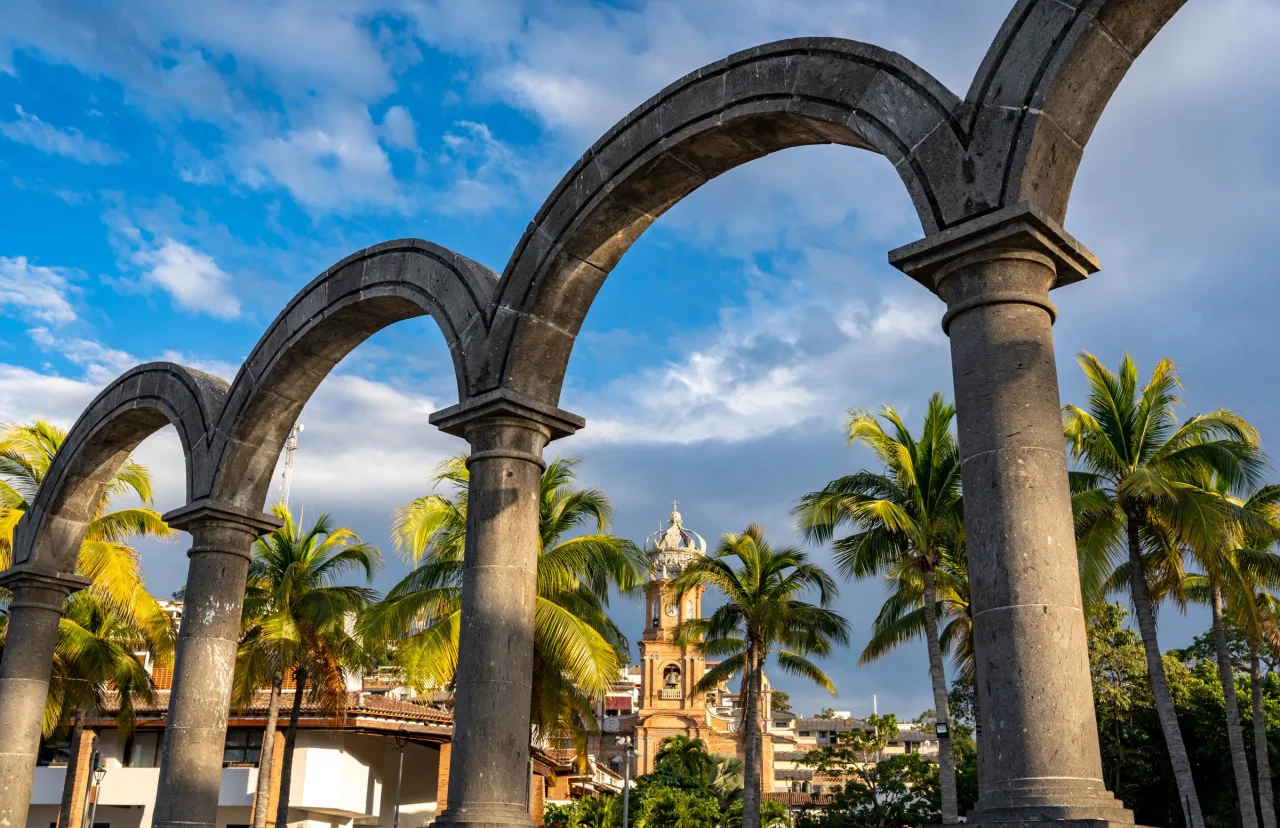
The rebuilt Malecón arches framing the Guadalupe church, photographed January 2, 2023. These waterfront arches are distinct from the natural Los Arcos rocks near Mismaloya. Photo: Soly Moses / Pexels · Pexels License.
Hurricane Kenna brought destructive seas to Vallarta in October 2002. NOAA’s account places landfall near San Blas, north of Puerto Vallarta, while also recording storm-surge effects here. The path of the eye and the wider area affected by the sea are different things.
Jalisco’s tourism authority describes the Malecón arches being knocked down and lost into the water, then replaced by replicas. Later promenade works also shifted their position slightly. The arches in the modern photograph below therefore tell a story of recovery. They frame an outdoor theatre and a communal waterfront setting whose importance survived the loss of the earlier stonework. These are the built arches in town, distinct from the natural Los Arcos rock formations offshore near Mismaloya.
Sources: Jalisco tourism authority — destination heritage inventory · NOAA — the 2002 hurricane season.
Raicilla connects Vallarta with surrounding coast and mountain communities through the knowledge of agave growers and distillers. The Instituto Vallartense de Cultura records the first Damajuana festival in March 2017. Its purpose included bringing regional master raicilleros into contact with the public and explaining work from planting agave through producing the spirit.
Recognition continued in 2019, when the federal government recorded publication of the Raicilla denomination of origin on June 28, covering sixteen municipalities in Jalisco and one in Nayarit. This is a regional tradition, not a product belonging only to the city. Its history directs attention to living skills and the people maintaining them. Heritage can be a practice passed between generations as well as a building or a photograph.
Sources: Instituto Vallartense de Cultura — Damajuana · Government of Mexico — First Government Report 2018–2019.
This original overview draws on municipal history, university research and the destination's tourism board. Sources checked November 8, 2026. The official founding tradition is distinguished from earlier settlement evidence.
- Universidad de Guadalajara — Archaeological sites in the municipality of Puerto Vallarta
- Gobierno Municipal de Puerto Vallarta — Reseña histórica
- Puerto Vallarta tourism board — History of Puerto Vallarta, Part II
- Universidad de Guadalajara — Historia de la Filmación
- Puerto Vallarta tourism board — The Church of Our Lady of Guadalupe
- Puerto Vallarta tourism board — El Malecón
- Puerto Vallarta tourism board — Los Muertos Pier
Explore Puerto Vallarta through local history, regional studies, personal recollections and fiction. Language and genre are identified so a novel or humorous memoir is not confused with documentary history.
University-hosted PDFs are linked where available. Library and publisher pages help identify other editions; stock, borrowing access and prices may change.
Héctor Pérez García and José Alfonso Baños Francia (coordinators)
Spanish · Local history and essays · 2018
An academic collection covering the municipality’s history, society, economy and tourism during its first century. A useful starting point for readers who want to go beyond the Hollywood story.
ISBN: 978-607-547-215-7
Read the university-hosted PDF →
Edmundo Andrade Romo, Myrna Leticia Bravo Olivas and José Luis Cornejo Ortega
Spanish · Heritage and tourism studies · 2019
A study of natural, cultural and productive heritage, and how conservation and tourism intersect in the municipality. Particularly relevant to the city’s buildings, landscapes and changing economy.
ISBN: 978-607-547-749-7
University book information and PDF →
Carlos Munguía Fregoso
Spanish · Regional history · 1997 edition in the ITESO catalogue
A regional historical overview, from pre-Hispanic and colonial background to the late twentieth century. The linked library record identifies the edition and author; it is not a free full-text promise.
View the ITESO library record →
Catalina Montes de Oca Aguilar
Spanish · Memoir and local recollections · Second edition, 2001
Personal recollections, anecdotes and local history by a Vallarta chronicler. Read it as a remembered account of community life, alongside documentary histories.
Find the edition in WorldCat →
Gil Gevins
English · Humorous expatriate stories
Humorous, anecdotal stories about making a life in Puerto Vallarta and Mexico. This is a resident writer’s comic perspective, rather than a scholarly history or a current practical guide.
Author profile and book reference →
Robert James Waller
English · Fiction / suspense · 1995
A novel with a Puerto Vallarta connection, following an American writer and a dangerous journey through Mexico. Listed here as fiction, not as evidence for the city’s history.
ISBN: 9780446517478
Read the publisher’s book description →
Tennessee Williams
English · Drama / film connection · New Directions paperback edition, 2009
Williams’s play provides the literary background to the film made at Mismaloya in 1963. The play is a work of drama; its connection to Vallarta comes through the later film production.
ISBN: 9780811218528
View the New Directions edition →
Book identities and source records checked November 16, 2026. These are reading suggestions, not claims that a particular shop or library currently has stock.
Listen to the people and institutions telling Vallarta’s stories today. These podcasts and local radio programmes complement the historical documentaries above with interviews, community voices and contemporary reporting.
The Puerto Vallarta Travel Show
English · Barry Kessler’s interviews with local residents, artists, restaurant owners and other people around the bay. A large on-demand archive offers personal stories and a record of changing Vallarta life.
ASPHALT — Radiante98.3FM
English · Jessy Ruiz and Brent Lane host a local magazine programme covering Vallarta voices, artists, food and community life. The station provides an episode archive; its published live slot is Saturday11am–1pm, Puerto Vallarta time.
Radio UdeG Puerto Vallarta104.3FM
Spanish · The university station’s local service covers culture, education and community matters. Explore its station page for live listening and its separate podcast archive for recorded programmes.
UDG Noticias Vallarta
Spanish · Local news editions from Radio UdeG Puerto Vallarta. Select a dated edition in the station’s Puerto Vallarta podcast archive.
FonoteCafé — Radio UdeG Puerto Vallarta
Spanish · A recorded programme in the university station’s Vallarta archive. Browse dated FonoteCafé editions alongside other local cultural and community programming.
Así Las Cosas PV — W Radio
Spanish · Sarahí Ortiz’s Vallarta news and interview programme. The broadcaster’s page offers complete programmes and interview segments covering the local community, public affairs and regional businesses.
Listen on the publisher’s own site. Audio remains with its creators; availability and live schedules may change. Programme sources checked November16,2026. Radio UdeG archive: recorded Puerto Vallarta programmes.
Explore Puerto Vallarta’s past through English-language documentaries, vintage filmmaking records, a history walk and an oral-history interview. Select a thumbnail to watch, or use its YouTube link.
 14:19
The Colorful History of Puerto Vallarta, Mexico (a Mini Documentary)
An English mini-documentary tracing Puerto Vallarta’s development from a small coastal community into an internationally known destination, including its Hollywood connections and changing identity.
Aaron Davison · English · Uploaded 2023-09-04
Watch on YouTube ↗ 7:39
Puerto Vallarta, Mexico — a Brief History
A concise English account of Puerto Vallarta’s recent past. The creator frames the film around the period from 1950 onward, offering another view of the city’s transformation.
GallivantingMan · English · Uploaded 2020-09-06
Watch on YouTube ↗ 17:48
History Walk in Puerto Vallarta
An English conversation and walking film through Old Town with the creator and his friend Sammy, reflecting on local history and the changes they see in the neighbourhood.
Timeless Travel Club · English · Uploaded 2022-04-01
Watch on YouTube ↗ 26:44
On Location: Night of the Iguana - Hollywood and the Stars
A vintage behind-the-scenes documentary narrated by Joseph Cotten, written and directed by William Kronick. Watch John Huston working with Richard Burton, Ava Gardner and Deborah Kerr during the Mexican production of The Night of the Iguana.
William Kronick · English · Vintage production documentary · Uploaded 2018-04-01
Watch on YouTube ↗ 13:38
On the Trail of the Iguana – Vintage Behind-the-Scenes Documentary Filmed in Puerto Vallarta
A short vintage production documentary filmed around Puerto Vallarta, offering another contemporary view of the making of The Night of the Iguana and its coastal setting.
A Stolen Paradise · English · Vintage production documentary · Uploaded 2016-06-19
Watch on YouTube ↗ 46:25
The True Story About the Making of the Night of the Iguana, an Interview with Author; Howard Johns
An extended English oral-history interview with Howard Johns, author of A Stolen Paradise, discussing his research into the making of The Night of the Iguana and its relationship with Puerto Vallarta. This selection is an interview, rather than a narrated documentary.
The Puerto Vallarta Travel Show · English · Oral-history interview · Uploaded 2017-07-20
Watch on YouTube ↗